


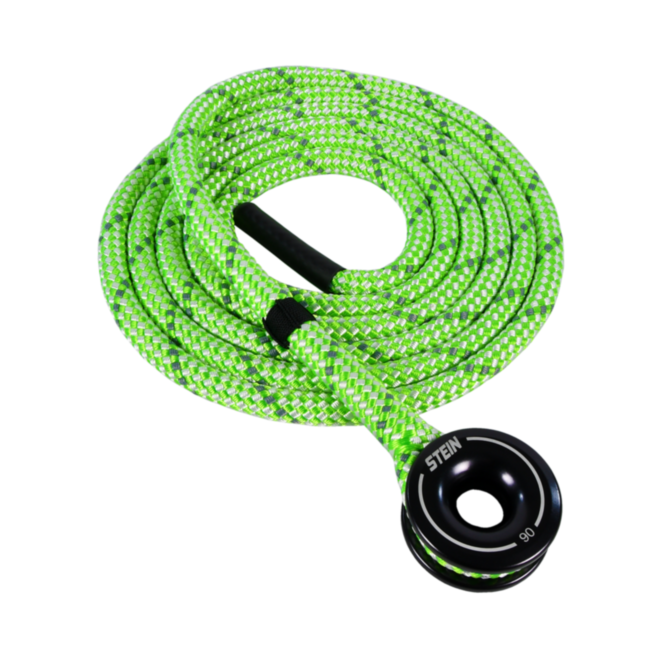
OMEGA-RQ 18mm ORB90 LFR Sling
- Stock Code
- SS-3381883R00
In stock
In stock
|
|
SECURE ONLINE SHOPPING |
|
|
WORLDWIDE SHIPPING |
Description
RIGIQ LFR Low Friction Ring Rigging Sling
The RIGIQ LFR Low Friction Ring Rigging Sling is a purpose-built solution for professional arborists looking for a lightweight, durable and versatile alternative to traditional rigging blocks in selected applications.
Made from RIGIQ OMEGA-RQ rope, this rigging sling is designed to perform in demanding arborist rigging systems where strength, reliability and smooth rope management matter. Paired with a precision-machined low friction ring, it delivers a dependable setup for redirects, fairleads, speedline systems and lowering device guidance.
The low friction ring is manufactured from specially engineered high-grade aluminium and finished with a hard anodised coating to provide an exceptionally smooth, low-friction surface. A deep rope groove helps keep the rigging line protected within the outer diameter of the ring, supporting controlled rope handling and reduced wear in use.
The RIGIQ LFR range is available in three ring sizes:
- ORB75 – Outer Diameter: 75 mm / Inner Diameter: 28 mm (OMEGA-RQ 16mm)
- ORB90 – Outer Diameter: 90 mm / Inner Diameter: 28 mm (OMEGA-RQ 18mm & 20mm)
- ORB100 – Outer Diameter: 100 mm / Inner Diameter: 38 mm (OMEGA-RQ 24mm)
Designed for flexibility in the tree, the sling can be used in a variety of configurations depending on stem size and rigging requirements. On larger stems, the full sling can be installed as a strong anchor configuration. On smaller stems, the extra length can be used as a backstay, helping improve stability and increase the load-dispersing capability of the setup. Because the sling is intended to be tied in use, it can also be manoeuvred mid-line to other positions while still integrated into the rigging system.
This makes the RIGIQ LFR an excellent option for redirecting pull lines on spars or standing trees, creating a highly durable attachment point for more traditional speedline systems, or leading the rigging line cleanly into the top of ratcheting or bollard-style lowering devices. Compared with hollow braid style constructions, the sling remains rounder under load, helping maintain a more consistent shape during use.
Key Features
- Made from RIGIQ OMEGA-RQ rope
- Available with LFR75, LFR90 and LFR100 ring options
- High-grade aluminium low friction ring
- Hard anodised smooth finish
- Deep rope groove for improved rope protection
- Lightweight alternative to traditional rigging blocks for selected uses
- Flexible tied sling configuration
- Ideal for redirects, fairleads and speedline systems
- Stays rounder under load than hollow braid constructions
Typical Applications
- Redirects
- Fairleads
- Speedline systems
- Lowering device guidance
- Load-distributing tied sling configurations
Important Warning
Low friction rings are extremely versatile, but they are not designed to replace rigging blocks in all applications. They should not be used where free-running rope movement or continuous adjustment under load is required. In these situations, a correctly rated rigging block or pulley should be used instead.
Single-ring configurations must only be used as redirects within a rigging system. A single ring does not provide sufficient bend radius to serve as the primary rigging point when dealing with significant loads. Incorrect use may increase stress on the rope and other rigging components.
This product is intended for rigging applications only and must be used by competent persons with suitable training and experience. Always inspect the sling, splice and ring before use, ensure compatibility with the complete rigging system, and never exceed the limits of any component in the setup.
| Product | Dia | Weight | Cover | Colour | MBS - Rope Body | MBS - Spliced | ||
|---|---|---|---|---|---|---|---|---|
| (mm) | (g/1m) | (%) | (kgf) | (daN) | (kgf) | (daN) | ||
| OMEGA-RQ 10 | 10 | 0.069 | 42 | Red | 2300 | 2256 | 2947 | 2890 |
| OMEGA-RQ 14 | 14 | 0.107 | 44 | Orange | 3230 | 3168 | 4255 | 4173 |
| OMEGA-RQ 14 | 14 | 0.15 | 44 | Blue | 4510 | 4423 | 5551 | 5444 |
| OMEGA-RQ 16 | 16 | 0.193 | 44 | Yellow | 5800 | 5689 | 6458 | 6333 |
| OMEGA-RQ 18 | 18 | 0.235 | 44 | Green | 7090 | 6953 | 8620 | 8453 |
| OMEGA-RQ 20 | 20 | 0.299 | 44 | Turquoise | 9020 | 8846 | 10247 | 10049 |
Rope body: un-terminated:
- Minimum Breaking Strength (MBS) un-terminated
- Test standard: ISO 2307 using a bollard-type termination
Termination: Spliced Eyes:
- Spliced-Eye Strength Rating (Sigma-derived)
- Basis: Calculated using Sigma standard deviation from 5 tensile test results (hand-spliced eyes).
- Test setup: Pin-to-pin tensile test; pin Ø50 mm; eye internal length 500 mm; overall specimen length 2,500 mm; double braid construction.
Reporting note: The spliced-eye rating is configuration and method-dependent and is provided as a statistically derived performance rating. It should not be used as a substitute for rope-body MBS unless the end-use configuration matches the stated test setup.
Important: All product information, specifications and performance data are provided for guidance only and were correct at the time of publication. Specifications may be updated without notice as part of ongoing product development.
Breaking Strength and Maximum Working Load
This product is supplied with breaking strength information (MBS/MBL). A maximum intended working load must be determined by the competent person by applying an appropriate Safety Factor (SF) to the breaking strength and ensuring the expected loads remain below that limit and below the ratings of all other components in the system.
Safety Factors (SF) / Design Factors
System Working Loads Rope and cordage systems are commonly managed using a Safety Factor (SF) (also referred to as a Design Factor or Coefficient of Utilisation). The Safety Factor is the relationship between the product’s breaking strength (e.g., MBS/MBL) and the maximum intended working load applied during use. The correct Safety Factor depends on the application, the environment, the expected loading type (static or dynamic), and the consequences of failure. In many rope rigging and lowering operations (including tree work), loads may be applied dynamically (e.g., during catches). The system and technique must be planned to minimise peak forces and avoid uncontrolled shock loading such as excessive free-fall, abrupt stops, or hard catches.
Typical Safety Factor guidance (set by the competent person/system designer):
- 5:1 – commonly used in controlled lifting system design
- 7:1 – commonly used for textile lifting slings in many EN-rated systems
- 10:1 (or higher) – often applied in rope rigging and lowering where dynamic effects and higher peak loads may occur
Important: These figures are provided as general guidance only. The required Safety Factor may be higher depending on the risk assessment, local regulations, industry practice, and operational conditions.
Note on terminology: “WLL” is typically a single limit assigned to equipment by the manufacturer under a defined standard. For rope systems, the competent person may determine a system working load / maximum intended working load by applying a Safety Factor appropriate to the task and conditions.
Always inspect rope and equipment before and after use. Retire any product showing signs of damage, excessive wear, contamination, heat damage, chemical exposure or other deterioration. Use only by trained and competent persons and in accordance with relevant industry best practice.
Specification
| Manufacturer | RIGIQ |
|---|---|
| Rope Type | OMEGA-RQ |
| Diameter (mm) | 18 |
| Colour | Yellow with Grey Fleck |
| MBS (kg / daN) | 8450-daN MBS |
| Coated | No |
| Eye Size (cm) | ORB90 Low Friction Ring |
| Product icon | Scannable |
| Brand | RIGIQ |